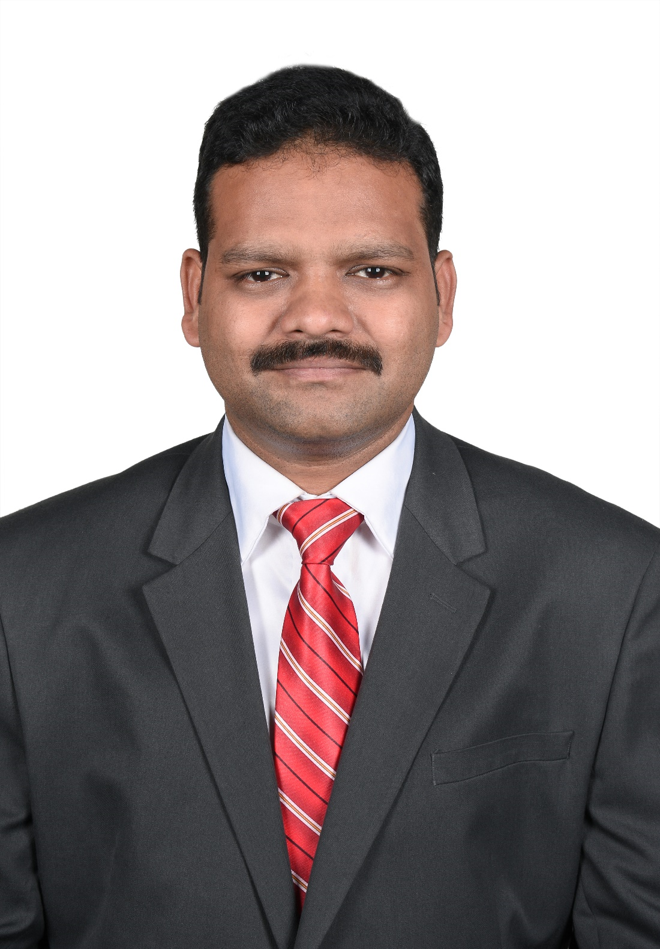
Bio
I am Dr. Hariharasudhan Sekar, a Professor and Senior Consultant Urologist at Sri Ramachandra Medical College and Research Institute, Chennai. With over two decades of medical experience, I have dedicated my career to advancing the science and practice of urology through clinical excellence, academic commitment, and surgical innovation.
My medical journey began with an MBBS (2001), followed by MS in General Surgery (2007), and M.Ch in Urology (2013). To complement my clinical practice with a systems-thinking approach, I pursued an MBA in Operations Management in 2017. This unique blend of surgical precision and administrative insight helps me contribute meaningfully not only in the operating theatre but also in academic leadership and healthcare management.
My clinical interests lie primarily in Endourology, Robotic urology, Laparoscopic urology, Reconstructive urology, and Renal transplantation. I specialize in minimally invasive procedures for kidney stones and prostate diseases, including retrograde intrarenal surgery (RIRS) and laser-based ureteroscopy and prostate surgery. I am actively involved in refining techniques that improve patient outcomes, reduce complications, and accelerate recovery.
Research is a core part of my professional identity. My current work includes comparative studies on advanced ureteral access devices and their impact on stone clearance, cost-efficiency, and patient safety. I’m also exploring the integration of non-invasive technologies and AI-based diagnostics in assessing bladder dysfunction and improving surgical planning. Another area of interest is the emerging role of urinary microbiome and exosome profiling in bladder cancer detection and personalized treatment strategies.
With over 30 peer-reviewed publications and numerous national and international conference presentations, I remain committed to academic excellence. I take great pride in mentoring postgraduate students and residents, nurturing their growth into confident, skilled urologists.
Beyond the hospital and classroom, I actively engage in community health programs and socio-medical camps, aiming to make specialized urological care accessible to underserved populations. I strongly believe that the future of urology lies in the intelligent fusion of technology, precision, and compassion. My vision is to contribute to this future by continuously learning, innovating, and collaborating—bringing the best of science and surgery together to serve every patient better.
Educations
MBBS – 2001
MS in General Surgery – 2007
M.Ch in Urology – 2013
Dip Lap – 2014
MBA in Operations Management – 2017
Research Interest
Projects
Comparision of HOLEP and Monopolar TURP for large volume prostate
TITLE OF THE RESEARCH PAPER:
“A RAprevious surgery in the prostate, bladder neck or urethra.NDOMISED TRIAL COMPARING HOLMIUM LASER ENUCLEATION (HOLEP) VERSUS TRANSURETHRAL RESECTION OF PROSTATE (TURP) IN THE MANAGEMENT OF LARGE VOLUME PROSTATES”
INTRODUCTION:-
The surgical management of men with large prostates (>40 g) that cause bladder outflow obstruction (BOO) secondary to benign prostatic hyperplasia (BPH) is a challenging area. Traditional treatment such as transurethral electrocautery resection of the prostate (TURP) has increased risks of bleeding and TUR syndrome [1] when treating the larger prostate, and it is generally contraindicated for glands >100 g. These glands have often been treated with the more significant procedure of open prostatectomy, which often exposes elderly patients to increased perioperative morbidity.
The holmium laser, with a wavelength of 2,140 nm, conducts through saline and maintains the ability to precisely incise prostatic tissue, and has excellent hemostatic properties. This minimises the risks of perioperative bleeding and TUR syndrome, which are significant concerns when performing TURP. Holmium laser resection of the prostate (HoLRP) is as effective as TURP in the management of BOO and has less perioperative morbidity than TURP [2–4]. This procedure has been further refined with the development of the soft tissue morcellator to allow enucleation of whole lobes of the prostate. Holmium laser enucleation of the prostate (HoLEP) can treat any prostate size, with minimal risk of TUR syndrome because saline rather than iso-osmolar electrolyte-free irrigating solution is used. Transfusion rates are also extremely low.
AIM OF THE STUDY:
To compare the efficacy and feasibility of HoLEP with conventional TURP. Our study also compares the Pre, Intra and postoperative outcomes of men with large prostates (60-100g on Transrectal ultrasound), who undergo HoLEP compared to those who undergo TURP.
MATERIAL AND METHODS:
- Site of the Study : Department of Urology and Renal Transplantation,
- SRIHER
- Type of Study: Prospective Randomised study
- Period of study : March 2024 – June 2025
- Sample Size : 25 according to admissions and operative statistics during the study period
( March 2024 – June 2024 ).
- The patient data are collected from the patient.
INCLUSION CRITERIA:
- Patient age between 50 and 80.
- The volume of the prostate was more than 60 mL and less than 100mL
- International prostate symptom score (IPSS)>1
- Quality of life (QOL) score ≥ 3
- Peak flow rate (Qmax) < 12ml/sec
- PVR > 100ml
- AUR with failed Trial void
EXCLUSION CRITERIA:
- Neurogenic bladder,
- High Serum PSA with a suspicion of Carcinoma prostate
- previous surgery in the prostate, bladder neck or urethra.
Intervention:
Group 1: The patients in the trial group were treated with HoLEP;
Group 2: The patients in the control group were treated with m-TURP, monopolar transurethral resection of the prostate.
Surgical technique:
Patients have been operated in lithotomy position under regional anesthesia.
HOLEP: Enucleation was performed at 2.0J and 50Hz, 100W potency. The device was a continuous flow 26FR resectoscope sheath (Storz(r)) and a working element prepared for laser with a 550 micra fiber stabilized inside a 4FR ureteral catheter.
Following the enucleation, the tissue was morcellated with Versacut Morcelator (Lumenis(r)). All fragmented tissue has been sent for histopathological evaluation.
TURP: The transurethral resection of the prostate was performed with monopolar eletrocautery (Wem(r)) with a cutting current of 120W and coagulating current of 80W. All resected tissue has been sent for histopathological examination.
At the end of the procedure, a triple lumen catheter was inserted into the bladder and continuous irrigation was started.
Awards & Recognitions
FIAGES
Fellowship of the Indian Association of Gastrointestinal Endo surgeons
FMAS
Fellowship in Minimal Access Surgery
News
Membership
AUA
American Urological Association
USI
Urological association of India
SZUSI
South zone Urological association of India
TAPASU
Tamil Nadu and Pondicherry Association of Urologist